 Overview
Why Choose Us For Water Heater Repair
Same-Day Diagnosis
Most repair calls get a technician on-site and a cause identified within hours, not days.
Gas & Electric Units
Trained on both tank and tankless systems from Rheem, A.O. Smith, Rinnai, and Navien.
Parts On The Truck
Common failure parts, elements, thermocouples, valves, ride on the truck for one-visit fixes.
Repair-First Advice
If a repair genuinely makes more sense than replacement, that's what we recommend.
Middle Tennessee water is moderately hard, and that mineral content settles as sediment inside a tank over years of normal use. In homes built before the 1990s in Franklin's historic core, older 30- and 40-gallon tanks are especially prone to sediment buildup that insulates the burner or element from the water above it, forcing the unit to run longer and fail sooner. Newer homes in Westhaven and Berry Farms typically run larger-capacity tanks that handle demand better but are not immune to the same wear pattern over a normal 10 to 15 year service life.
Common SignsSigns You Need Water Heater Repair
No Hot Water At All
Often a failed heating element on electric units or a pilot/ignition fault on gas units.
Lukewarm Water
A partially failed element, a thermostat out of calibration, or heavy sediment insulating the burner.
Popping Or Rumbling
Sediment settled at the tank bottom trapping water that superheats and pops as it escapes.
Rusty Or Discolored Water
Usually internal tank corrosion, a sign the anode rod is spent and the tank is aging out.
No Hot Water Right Now?
A licensed technician can diagnose the problem today.
How A Repair Visit Works
Diagnose
Full check of the element, thermostat, gas valve, venting, and pressure relief valve.
Flat Quote
You approve one price for the fix before any work begins.
Repair
Most single-part failures are resolved in the same visit.
Test
Recovery time and temperature checked before we leave the property.
What Water Heater Repair Costs
Most single-part repairs land in this range. A full diagnostic that turns up a cracked tank moves the conversation to replacement instead.
Water Heater Repair In Franklin, TN
Franklin's mix of housing stock plays into this more than people expect. A pre-1970s home near Downtown Franklin's historic district is more likely to be running an aging tank on original supply lines, while a newer build in Westhaven or Berry Farms is more likely to see a first-generation unit reaching the end of its factory-rated life around the same 10 to 12 year mark. Either way, catching a failing water heater before it fails completely, rather than after a Sunday morning with no hot water, is mostly a matter of paying attention to the early signs above.
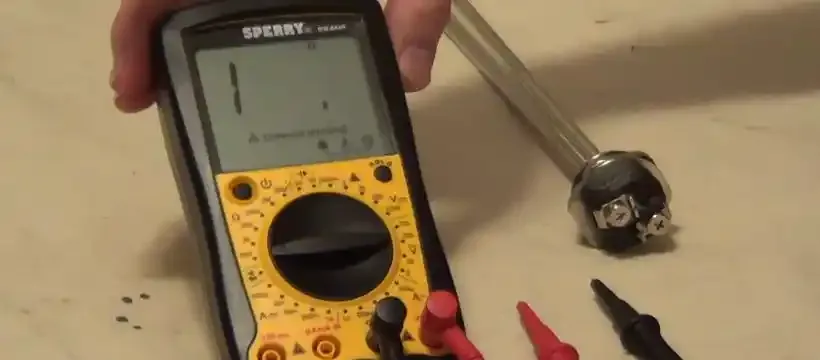
Gas and electric units fail differently, and that shapes what a repair visit actually looks like. On an electric tank, the most common call is a failed upper or lower heating element, usually confirmed with a simple resistance test, followed by a straightforward swap. On a gas unit, more of our repair calls trace back to the thermocouple or gas control valve losing the ability to hold a pilot signal, which reads to a homeowner as "the pilot won't stay lit" even when the pilot itself is fine. We test both possibilities rather than assuming, since replacing the wrong part costs a homeowner real money for no fix.
We also see a specific pattern in Franklin's older two-story homes near downtown: a water heater in a first-floor closet or basement utility room feeding a second-floor bathroom loses temperature faster than the same unit would in a single-story ranch, simply because of the longer supply run and heat loss along the way. That's not a failure, but it does affect what "normal" recovery time looks like for that specific house, which is part of why we check actual layout before telling a homeowner what to expect from a repaired unit.
FAQsCommon Questions
Often, yes. If the tank itself isn't leaking or corroded through, a failed element, thermostat, or gas valve is a straightforward repair.
Most single-part repairs are finished in one to two hours once the cause is confirmed.
Rumbling or popping usually means sediment buildup. It's not an emergency, but it does shorten the unit's remaining life if left alone.
Yes, we service tankless systems from Rinnai and Navien in addition to standard tank units.