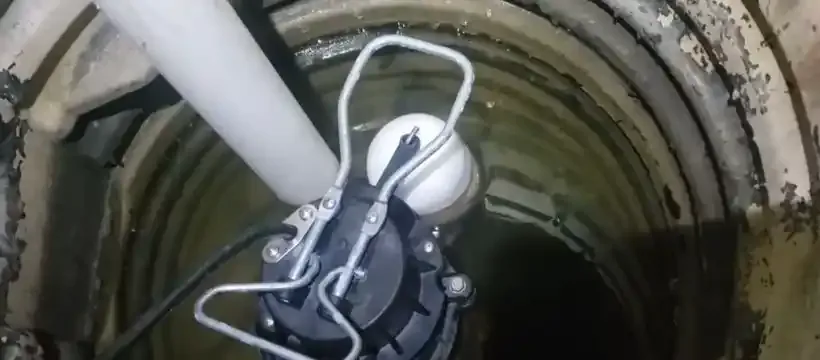
 Overview
Why Choose Us For Sump Pump Installation & Repair
Same-Day Repair
A failed pump during active rain is treated as a priority call.
Correct Sizing
Pumps matched to actual basin size and expected inflow, not a generic default.
Battery Backup Options
Battery or water-powered backup for when a storm takes out the power.
Full System Check
Check valve, discharge line, and float switch inspected, not just the pump.
Williamson County's spring rain season, typically March through May, is when sump pumps see their heaviest demand, with a secondary spike during summer thunderstorms. A pump that was adequate when a home was built may be undersized for how much groundwater a property actually sees now, especially if grading or drainage elsewhere on the lot has changed. Battery backup matters more here than in a lot of markets, because the same severe weather that triggers heavy groundwater intrusion is also what's most likely to knock out power.
Common SignsSigns You Need Sump Pump Installation & Repair
Pump Runs Constantly
May indicate a stuck float switch or a system undersized for current inflow.
Pump Doesn't Turn On
Often a failed float switch, a tripped breaker, or a burned-out motor.
Water In The Basin After A Storm
Signals the pump couldn't keep pace with inflow during heavy rain.
Unusual Noise Or Vibration
Worn bearings or a pump nearing the end of its service life.
Sump Pump Failed During A Storm?
Same-day repair before more water gets in.
How Do I Know If My Sump Pump Is Actually Sized Right?
A lot of Franklin homeowners only find out their sump pump is undersized after it fails during the storm that mattered most. The honest way to check is to look at how often the pump is cycling during a normal heavy rain, if it's running near-constantly rather than cycling on and off, it's either undersized for current inflow or nearing failure. We measure basin size and estimate peak inflow based on the property's grading and known karst-soil water table behavior, then size a replacement pump with enough headroom for a genuinely heavy storm, not just an average one.
ProcessHow Installation Or Repair Works
Assess
Check the basin, inflow rate, discharge line, and current pump condition.
Size Correctly
Match pump horsepower and switch type to actual demand.
Install Or Repair
New pump set or existing unit repaired, with check valve verified.
Test Under Load
Basin filled to confirm the pump cycles and discharges correctly.
What Sump Pump Installation & Repair Costs
A straightforward pump replacement sits at the lower end, a new system with battery backup and discharge line work sits higher.
Sump Pump Installation & Repair In Franklin, TN
We treat sump pump sizing as a Williamson County-specific calculation, not a one-size-fits-all recommendation. A property near the Harpeth River floodplain or on a lot with known drainage issues needs more pump capacity and a backup system than a well-graded lot on higher ground, even if both homes are the same age and size.
FAQsCommon Questions
Most residential pumps last 7-10 years under normal use. Homes with heavier inflow from karst-soil conditions may see shorter lifespans.
In Franklin, where heavy rain and power outages often happen together, a backup system meaningfully reduces flood risk during the storms that matter most.
Continuous groundwater seepage in clay-heavy soil can keep a basin filling slowly even between storms. Constant cycling is worth having checked.
Yes, and in most karst-soil cases it should be. Drain tile collects the water, the pump moves it out.