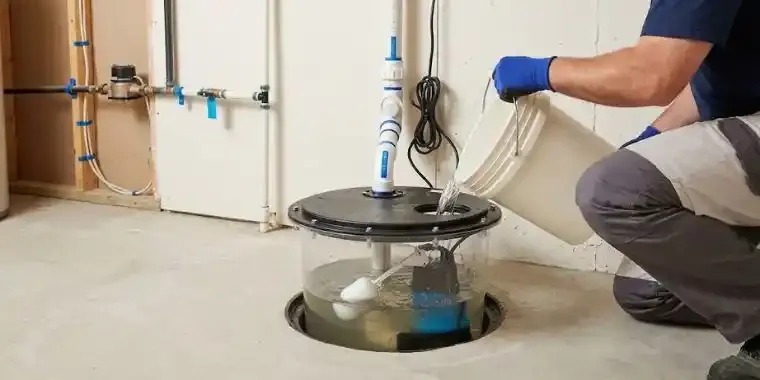
Most sump pumps get zero attention until the moment they fail, which is also, reliably, the worst possible moment: mid-storm, when the pump is working hardest and a basement is most exposed. A short maintenance check before Middle Tennessee's spring rain season starts, typically March through May, is one of the highest-value few minutes a Franklin homeowner can spend on their house.
Part of why this gets neglected so consistently is that a working sump pump is completely invisible day to day, tucked into a basin in a corner of the basement, doing nothing most of the year until a heavy rain actually calls on it. That invisibility is exactly the problem. A pump quietly failing in October has no way of announcing itself until the following spring's first serious storm puts it to the test, which is precisely the wrong time to discover it.
Why This Matters More Here Than In A Lot Of Places
Williamson County's karst-clay soil pushes a real volume of groundwater toward foundations during heavy, sustained rain, and a sump pump is often the last line of defense between that water and a dry basement. Spring is the peak season, with a secondary bump during summer thunderstorms. A pump that's been fine all year can still be inadequate, or simply failing, right when the season's heaviest rain arrives.
The Checklist
- Pour water into the basin and watch it cycle. A few gallons should be enough to trigger the float switch and start the pump. If it doesn't activate, or activates late, that's worth investigating before you need it for real.
- Listen for unusual noise or vibration. Grinding, rattling, or excessive vibration during operation often signals worn bearings or a pump nearing the end of its service life.
- Check the discharge line outside. Confirm it's actually draining water well away from the foundation, not just a few feet before pooling right back toward the house. A clogged or frozen discharge line defeats the whole system even if the pump itself works perfectly.
- Inspect the check valve. This valve keeps water from flowing back into the basin after the pump shuts off. A failed check valve makes the pump cycle far more than it should, which shortens its lifespan.
- Clean debris out of the basin. Dirt, gravel, and small debris can interfere with the float switch or get pulled into the pump itself.
- Test the backup power source if you have one. Battery backups lose capacity over time even when never used. If yours hasn't been tested in over a year, it's worth confirming it still holds a charge.
- Note how often the pump cycles during a normal rain. If it's running near-constantly rather than cycling on and off, that's a sign the system is either undersized for current inflow or close to failing.
Why Battery Backup Matters More In Franklin Specifically
The same severe spring storms that trigger the heaviest groundwater intrusion are also the storms most likely to knock out power. A sump pump with no backup power is exactly the kind of system that fails at precisely the moment it's needed most. A battery or water-powered backup system closes that gap, and it's one of the more meaningful upgrades available for a relatively modest cost.
Not sure your pump is up to the job this season?
☎ (615) 616-0512How Often Should The Pump Itself Be Replaced
Most residential sump pumps have a realistic service life of around 7 to 10 years under normal conditions, though homes with heavier inflow from karst-soil groundwater sometimes see shorter lifespans given how much more frequently the pump actually cycles compared to a lighter-duty installation elsewhere. If you don't know your pump's age because it came with the house, a rough way to estimate is checking the manufacture date stamped on the unit itself, usually on a label near the top. A pump already past the 10-year mark is worth budgeting for replacement even if it's currently passing the bucket test, since age-related wear on internal seals and bearings doesn't always announce itself clearly before a failure.
Quick Answers
How much water should I use to test my sump pump? A few gallons poured steadily into the basin is usually enough to trigger the float switch and confirm the pump activates and drains the basin properly.
Is a battery backup a one-time purchase? The backup pump itself lasts years, but the battery powering it typically needs replacement every 3 to 5 years to hold a reliable charge through an actual outage.
Should I test my sump pump more than once a year? Testing before spring rain season is the most important check, but a quick visual look after any period of heavy rain is a reasonable added habit.
What's the biggest mistake homeowners make with sump pumps? Assuming a pump that's never failed is automatically fine. Pumps fail without warning more often than homeowners expect, which is exactly why a periodic test matters more than relying on past performance alone.
When Maintenance Isn't Enough
If the checklist above turns up a pump that's cycling constantly even outside of heavy rain, making unusual noise, or failing to activate reliably, that's past the point where cleaning and testing solves it. It's also worth an honest look at sizing: a pump that was adequate when a home was built may simply be undersized for how the property drains today, especially if grading or landscaping nearby has changed.
Pairing It With Basement Waterproofing
A sump pump only handles water that's already made it into the basin. If a home has a history of wall seepage as well, it's worth having that looked at alongside the pump itself, since drain tile paired with a properly sized pump addresses both the collection and the removal side of the problem together, rather than treating them as separate issues.
The Bottom Line
Ten minutes with a bucket of water before spring rain season starts is a genuinely useful habit, not overkill. It's the cheapest insurance available against the specific kind of storm that tends to catch Franklin basements off guard.
If it's been more than a year since your pump was last checked by anyone, that alone is reason enough to move it up the priority list before the next serious storm rolls through, rather than finding out its condition during one.
Have a plumbing issue in Franklin, Brentwood, or Spring Hill?
☎ (615) 616-0512