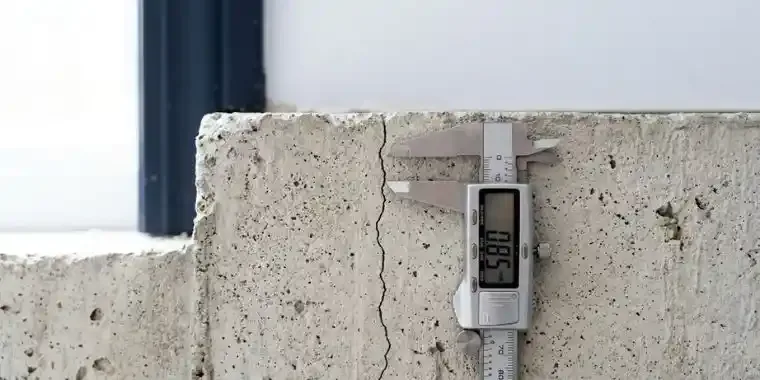
A crack in a foundation wall gets a homeowner's attention fast, and the first question is almost always the same: is this a plumbing problem, a structural problem, or just normal settling that doesn't need anything at all? In Williamson County, the honest answer is that it can genuinely be any of the three, and the soil underneath most homes here is a common thread running through all of them.
The Soil Connection
Williamson County sits on karst terrain, limestone bedrock overlaid with clay-heavy soil that expands when saturated and contracts as it dries. That constant, seasonal movement puts stress on a foundation that a home built on more stable soil simply doesn't experience to the same degree. Hairline cracks from this kind of normal seasonal movement are common and usually cosmetic. The distinction that actually matters is whether a crack is stable or actively growing, and whether it's accompanied by other signs like uneven floors, sticking doors and windows, or water intrusion.
When It's Genuinely Just Soil Movement
Small, stable hairline cracks, especially ones that have been there for years without visibly widening, are typically just the foundation responding to normal seasonal clay movement. These don't usually need plumbing or structural intervention beyond monitoring, though sealing them to prevent water intrusion is often a reasonable precaution.
Not sure if a crack is plumbing-related?
☎ (615) 616-0512Why Timing Matters: Spring Versus Late Summer
Cracks tend to become newly visible or noticeably widen at specific points in the seasonal cycle, which is itself a useful diagnostic clue. A crack that opens up during Williamson County's wet spring months, when clay soil is fully saturated and expanded, and then appears to close somewhat by late summer as the soil dries and contracts, is behaving exactly the way ordinary seasonal movement behaves. A crack that keeps growing regardless of season, or that doesn't show any seasonal give-and-take at all, is a different pattern and more likely to reflect either a genuine structural issue or a leak keeping the soil beneath it consistently saturated regardless of the weather outside.
Quick Answers
How wide is too wide for a foundation crack? As a general guideline, cracks wider than about a quarter inch, or ones that have grown noticeably from their original width, warrant a professional look rather than routine monitoring.
Can I fill a crack myself while I wait to have it assessed? A temporary sealant can help prevent water intrusion while you arrange an inspection, but it will make it harder to visually track whether the crack is still growing underneath.
Does homeowner's insurance cover foundation cracks? It depends heavily on cause and your specific policy. Sudden events are sometimes covered, gradual settling generally is not. Checking your policy directly is the only reliable answer.
Should I get a second opinion before major foundation work? For anything beyond routine monitoring, yes. Foundation work is a significant investment, and a second assessment, especially one from a plumber checking for a leak-driven cause first, can sometimes reveal a simpler fix than the structural repair initially proposed.
When It Points To A Plumbing Leak
This is the connection that surprises a lot of homeowners. A leaking supply line or drain pipe running beneath or near a slab foundation can saturate the soil directly underneath it, and saturated soil loses load-bearing capacity. In some cases the foundation actually settles into the softened ground, which shows up as a crack, uneven flooring, or a door that suddenly won't latch correctly. The tell here is usually an unexplained rise in the water bill alongside the structural symptoms, or a warm, damp spot on the floor if it's a hot water line. If that combination is present, it's worth a proper leak detection pass before assuming the crack is purely structural, since fixing the leak is a very different job, and a very different price, than fixing the foundation.
When It's Actually A Structural Issue
Cracks that are actively widening, especially ones wider than a quarter inch, running horizontally, or appearing as a stair-step pattern through masonry block, are signs worth having assessed by a structural or foundation specialist rather than a plumber. This is also true for any crack accompanied by a visibly leaning or bowing wall. We're straightforward about this distinction when we're on-site, since telling a homeowner they need a foundation contractor rather than trying to sell an unrelated plumbing service is the honest call.
Sinkhole Risk Is A Separate, Rarer Concern
Karst terrain throughout Middle Tennessee carries a documented, if less common, sinkhole risk tied to the same limestone-dissolution process that shapes the region's geology. This is a different mechanism than ordinary clay-soil movement, and it's worth flagging specifically if a foundation issue is accompanied by a new depression or soft spot in the yard, not just a wall crack. That combination deserves a dedicated geotechnical evaluation rather than a standard plumbing or waterproofing visit.
What To Actually Do If You Find A New Crack
- Note the width and take a photo with a ruler or coin for scale, so you have a baseline to compare against later.
- Check for a pattern: is it alone, or accompanied by sticking doors, sloping floors, or water intrusion nearby?
- Watch it for a few weeks if it's small and stable. Mark the ends with a pencil line to make future growth obvious.
- If it's growing, wide, or paired with water intrusion or a rising water bill, get it looked at rather than waiting.
Basement waterproofing and foundation crack concerns often overlap enough that it's worth having both angles covered, and if drainage or hydrostatic pressure turns out to be a contributing factor, our basement waterproofing page walks through how we approach that specific piece of the puzzle.
The Short Version
Most foundation cracks in Williamson County are ordinary clay-soil movement. Some are a plumbing leak in disguise. A smaller number are genuinely structural. Telling the three apart usually just takes a proper look, and it's worth getting that look before assuming the worst, or ignoring something that actually needs attention.
Whichever category a crack turns out to fall into, the underlying karst-clay soil dynamic driving it isn't going away, which is why a lot of homes in this area benefit from periodic monitoring as routine maintenance rather than a one-time inspection after something's already gone wrong.
Have a plumbing issue in Franklin, Brentwood, or Spring Hill?
☎ (615) 616-0512