A burst pipe is one of the few plumbing emergencies where what a homeowner does in the first few minutes genuinely changes the outcome. Water flowing for twenty minutes causes meaningfully less damage than water flowing for two hours, and most of that difference comes down to a few specific, calm actions rather than panic.
It helps to know this in advance rather than working it out for the first time under stress. A burst pipe rarely gives warning, one moment everything is normal, the next there's water actively spreading across a floor, and the natural instinct is to start cleaning up immediately. Cleanup matters, but it matters less than stopping the source, and the order those two things happen in is what actually determines how big the eventual damage and repair bill turns out to be.
Minute One: Shut Off The Main Water Supply
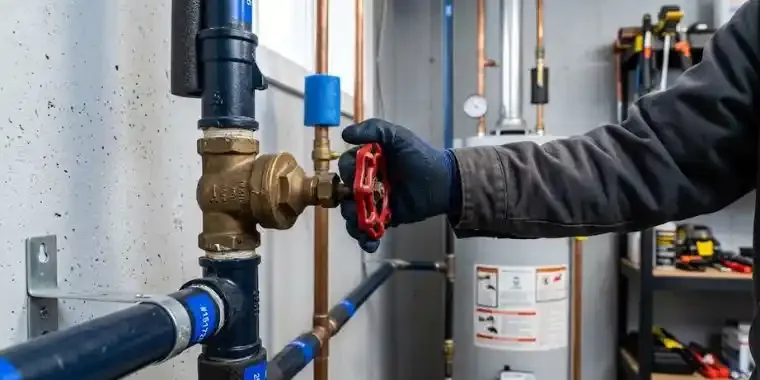
This is the single most important step, and it should happen before anything else, including calling for help. Every home's main shutoff location is a little different, but it's most commonly found where the water supply enters the house: a basement, a crawlspace access point, a utility closet, or an exterior wall near the street-facing side of the property. Turn the valve clockwise until it stops. If you've never located yours, this is worth doing on a calm day, not for the first time mid-emergency.
If you can't find the main shutoff quickly, look for a local shutoff valve closer to the burst itself, many fixtures and appliances have their own dedicated valve that can stop flow to that specific area without cutting water to the whole house.
Minute Two: Turn Off Electricity To The Affected Area If Water Is Near Outlets Or Fixtures
Water and electricity are a genuinely dangerous combination. If the burst pipe is near an outlet, a light fixture, or any electrical panel, and it's safe to reach your breaker panel without walking through standing water, shut off power to that specific area. If reaching the panel means walking through water, don't. Wait for help instead.
Minutes Three Through Five: Call For Emergency Help
Once the water is shut off, call. A pipe that's stopped flowing isn't an emergency requiring you to stand there anxiously, but it does need a professional assessment and repair, and the sooner that's scheduled, the sooner any standing water gets addressed too. Our emergency line runs 24/7 specifically because burst pipes don't wait for business hours.
Dealing with a burst pipe right now?
☎ (615) 616-0512What To Tell The Dispatcher When You Call
A quick, clear description on the phone helps a technician arrive prepared rather than needing to reassess everything on-site. Useful details include roughly where in the house the burst happened, whether you've already shut off the main water supply, whether water is still actively flowing or has stopped, and whether the area involves any electrical outlets or fixtures. You don't need to diagnose the cause yourself, that's the technician's job once they arrive, but a clear picture of what's happening lets dispatch prioritize appropriately and lets the technician bring the right approach from the start rather than working it out from scratch at the door.
Minutes Five Through Ten: Start Managing Standing Water
While waiting for help to arrive, if there's already standing water:
- Move furniture, rugs, and belongings out of the affected area if it's safe to do so
- Use towels, a mop, or a wet/dry vacuum to remove as much standing water as possible
- Open windows or run a fan if practical, to start air movement in the space
- Take a few photos of the damage before you start cleanup, useful for any insurance claim later
Don't spend so much time on this that it delays the call for help. Managing water is secondary to stopping its source and getting a professional en route.
Quick Answers
Is it safe to use towels or a wet vacuum near a still-active leak? Only once the water source itself is shut off. Managing standing water while the leak is still actively flowing just means cleaning up a moving target.
Should I try to patch the pipe myself before help arrives? Temporary tape or clamp fixes rarely hold under real pressure and can complicate the eventual professional repair. Shutting off water and waiting is the more reliable approach.
What if I can't find my main shutoff at all? Describe the situation when you call, our dispatcher can often help you locate a nearby fixture-specific shutoff valve over the phone while a technician is on the way.
How long does an emergency repair visit usually take? Most single-point burst pipe repairs are completed within an hour or two once a technician arrives, though timing depends on the pipe's location and how accessible it is.
Why Franklin Sees These Even Without Hard Freezes
Franklin's winters are milder than a true freeze-thaw market, but real hard-freeze nights do happen, and pipes in uninsulated crawlspaces, exterior walls, or unheated garages are vulnerable when temperatures drop hard. Outside of freeze events specifically, aging galvanized pipe common in the city's older housing stock is just as frequent a cause, corroding internally for years until a section finally gives out under normal pressure.
After The Immediate Emergency: What Comes Next
Once the burst is repaired, it's worth an honest look at whether water made it further than the immediate area suggests. Water travels along framing and under flooring in ways that aren't always obvious right away. If there's any doubt, a proper water damage assessment catches what a quick visual check might miss, since drywall and insulation that absorbed water but look fine on the surface can still lead to mold if it isn't fully dried out.
The One Thing Worth Doing Today, Not During An Emergency
Go find your main water shutoff valve right now, while nothing's wrong. Know exactly where it is and confirm it actually turns. That five-minute exercise on an ordinary day is what makes minute one of an actual emergency fast instead of frantic.
It's also worth sharing that location with everyone else in the household who's old enough to act on it. A burst pipe doesn't wait for the one person who knows where the valve is to be home, and a family member who can shut off water immediately, even without calling anyone first, is often the single biggest factor in how contained the eventual damage turns out to be.
Have a plumbing issue in Franklin, Brentwood, or Spring Hill?
☎ (615) 616-0512