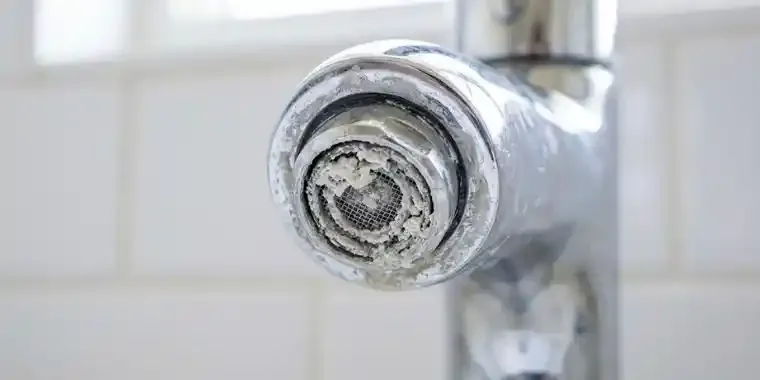
Water hardness comes up constantly in plumbing conversations, but the honest answer for Franklin doesn't fit neatly into either the "don't worry about it" or "you desperately need a softener" camp that a lot of marketing pushes toward. It's somewhere in the middle, and understanding where exactly matters more than the label itself.
Part of the confusion comes from how differently "hard water" gets used depending on who's talking. A softener sales pitch has an incentive to describe almost any measurable hardness as a serious problem, while a general plumbing resource written for a national audience might describe Franklin's actual mineral content as barely worth mentioning. Neither framing is fully honest. The measured reality sits in a specific, moderate range that has real but limited effects, worth understanding on its own terms rather than through either extreme.
Where Franklin's Water Actually Comes From
The City of Franklin Water Management Department draws surface water from the Harpeth River, treated at the Lewisburg Pike facility, and supplements that supply through the Harpeth Valley Utility District, which itself sources from the Cumberland River. Blended supply from more than one source is part of why hardness can read slightly differently from one part of the city to another, rather than a single fixed number citywide.
What "Moderately Hard" Actually Means
Local plumbing professionals generally describe Middle Tennessee's water, including Franklin's, as moderately hard. That's a real, measurable mineral content, primarily calcium and magnesium, but it's a meaningfully different situation than the genuinely extreme hardness levels seen in some regions of the country. It's worth taking seriously as a long-term maintenance factor. It's not worth panicking over.
What Moderate Hardness Actually Does Over Time
- Water heater sediment buildup. This is the most consequential effect. Mineral content settles at the bottom of a tank over years, insulating the burner or lower element and shortening the unit's effective lifespan. It's a real contributing factor to why water heater repair calls in Franklin often land in the 8 to 10 year window.
- Scale on fixtures. The white, chalky residue around faucets and showerheads that builds up gradually and needs periodic cleaning to keep fixtures looking and functioning well.
- Reduced soap and detergent effectiveness. Hard water minerals interfere with how soap lathers, which is part of why some households notice they're using more soap or detergent than the packaging suggests should be necessary.
- Spotting on dishes and glassware. Mineral deposits left behind as water evaporates, a cosmetic effect but a noticeable one.
Does This Mean You Need A Softener?
Not automatically. For a lot of Franklin households, moderate hardness is a manageable background factor rather than an urgent problem, and the honest answer depends on what a homeowner is actually noticing and how much it bothers them. A whole-home softening or filtration system makes the most sense for households noticing real scale buildup, spotting they'd like resolved, or who want to extend a water heater's realistic lifespan toward the longer end of the range rather than the shorter one.
Noticing scale or spotting around your home?
☎ (615) 616-0512How Hardness Compares To Other Tennessee Markets
Middle Tennessee's moderate hardness sits meaningfully below the genuinely extreme levels found in some parts of the country where water sources draw heavily from limestone aquifers with much higher mineral saturation. Franklin's blended river-sourced supply, drawing from the Harpeth River and supplemented through the Harpeth Valley Utility District's Cumberland River source, keeps hardness in a moderate range rather than the higher levels a pure groundwater or well-fed municipal system in a more mineral-heavy area might see. This context matters mostly for calibrating expectations: a Franklin homeowner who's lived somewhere with genuinely hard water before moving here may find local conditions comparatively mild, while someone accustomed to very soft water elsewhere may notice the difference more.
Quick Answers
Does hard water affect drinking water safety? No. Water hardness is a mineral content and taste factor, not a safety concern. Franklin's municipal water is treated and meets safety standards regardless of hardness level.
Will a softener make my water taste different? Some people notice a slightly different taste or a "slicker" feel to softened water, which is simply the reduced mineral content. It's not harmful, just a texture change some households need to adjust to.
Can I test my own water hardness at home? Basic test strips are available and give a rough reading, though a professional test provides more precise numbers useful for correctly sizing any filtration or softening equipment.
Does hardness change seasonally? It can shift slightly with source water conditions across the year, though not enough in Franklin's case to change the practical picture for a homeowner deciding whether to address it.
Testing Before Assuming
Since hardness can vary somewhat by neighborhood given the blended supply sources, we'd rather test a specific property's water before recommending equipment sized for a generic citywide average. It's a better starting point than guessing, and it avoids selling a bigger system than a particular household actually needs.
The Realistic Takeaway
Franklin's water hardness is a real, secondary factor worth understanding, not a dramatic problem requiring immediate action. If you're noticing scale, spotting, or a water heater that seems to be failing earlier than it should, it's worth addressing directly. If none of that has come up yet, it's reasonable to simply keep it in mind as part of normal home maintenance rather than treating it as urgent.
The most practical approach is treating hardness as one factor among several in how you maintain your home, alongside things like anode rod checks and fixture cleaning, rather than either the single explanation for every plumbing issue or something to dismiss entirely.
If you've recently moved to Franklin from a market with genuinely soft or genuinely hard water, give yourself some time to recalibrate expectations. What reads as a surprising amount of scale to a former soft-water household is often just normal, moderate buildup by local standards, and what reads as barely noticeable to someone used to extremely hard water is still worth a periodic check here.
The takeaway for most Franklin households is simply this: pay attention to what your specific fixtures and appliances are telling you rather than reacting to a national average that may not describe your water at all. A modest, well-informed response beats either extreme, ignoring it completely or assuming the worst based on marketing rather than an actual test.
Have a plumbing issue in Franklin, Brentwood, or Spring Hill?
☎ (615) 616-0512