Commercial plumbing carries different stakes than residential service. A dripping faucet at home is an annoyance. A restroom out of service during business hours, or a slow drain backing up near retail floor space, costs a business real revenue for every hour it's down. The Cool Springs corridor, home to the CoolSprings Galleria and a wide mix of retail, office, and restaurant tenants, has specific maintenance patterns worth understanding by property type.
Cool Springs has grown substantially over the past couple of decades, evolving from a smaller commercial pocket into one of Franklin's busiest retail and office corridors. That growth trajectory matters for plumbing infrastructure specifically: a building constructed for the corridor's earlier, lighter-traffic era is sometimes still running the plumbing capacity it was originally built with, even though the tenant mix and foot traffic around it has changed considerably. Recognizing that gap between original design capacity and current actual use is often the first step toward a maintenance plan that actually fits the building's present reality rather than its original one.
Retail Spaces: High-Traffic Fixture Wear
Commercial-grade restroom fixtures see dramatically more use than residential ones, and that wear shows up faster than most retail managers expect. Faucet cartridges, flush valves, and shutoff valves in a high-traffic customer restroom benefit from a proactive inspection schedule rather than waiting for a customer complaint or a visible leak. A quarterly walk-through of restroom fixtures, checking for slow drips, weak flush pressure, or valve leaks, catches most issues before they become an out-of-service sign on the door.
Food Service: Grease Trap Maintenance
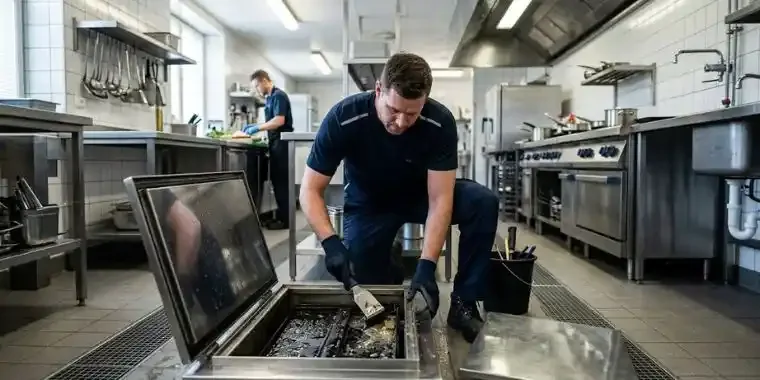
This is the single most consequential recurring maintenance item for any Cool Springs restaurant or food service tenant. A neglected grease trap doesn't fail gracefully, it backs up, often during service hours, and the resulting cleanup and downtime costs far more than staying ahead of a regular cleaning schedule would have. Cleaning frequency depends on kitchen volume and grease output, but any food service tenant that's never established a regular grease trap maintenance schedule is carrying more risk than they realize.
Office Buildings: Water Heater Sizing And Backflow Testing
Older office buildings in the Cool Springs corridor sometimes carry a water heater sized for the building's original tenant mix rather than its current, often higher-traffic use. A break room or shared kitchen that's seen usage grow over years can start showing signs of an undersized system, slower recovery, inconsistent temperature, that are worth addressing before it becomes a daily frustration for staff. Larger commercial systems also frequently require periodic backflow prevention testing and certification, a compliance item worth tracking on a calendar rather than discovering it's overdue during an inspection.
Need commercial plumbing service in Cool Springs?
☎ (615) 616-0512Budgeting For Commercial Plumbing As A Line Item
One of the more useful shifts a business can make is treating plumbing maintenance as a planned annual line item rather than an unplanned expense that shows up only when something breaks. A rough framework: set aside a modest annual amount tied to the size and type of the space, food service tenants generally warranting a higher allocation than office space given grease trap and higher fixture-wear needs, and treat any given year's actual spend against that budget as a signal. Consistently going well under budget suggests the maintenance cadence is working. Consistently blowing past it suggests either an aging system needing bigger investment or a maintenance schedule that isn't actually being followed closely enough to catch issues early.
Quick Answers
How much does commercial backflow testing typically cost? It varies by system size and local requirements, but it's a modest, predictable annual or biannual cost compared to the compliance risk of an expired certification.
Can a small retail tenant skip a formal maintenance schedule? Even a small space benefits from at minimum a basic annual check, since the cost of a single emergency closure during business hours often exceeds several years of routine maintenance.
Do you offer service contracts for multiple Cool Springs properties? Yes, for property managers or businesses with multiple locations, a standing service arrangement is worth discussing directly so we can build a maintenance cadence around your specific portfolio.
What's the biggest mistake businesses make with plumbing maintenance? Waiting for a visible problem before scheduling anything. By the time a leak or backup is obvious to customers or staff, it's usually been developing quietly for weeks, and the eventual fix costs more than catching it early would have.
Multi-Tenant Buildings: Coordination Matters
Shared commercial buildings add a layer of complexity that single-tenant properties don't have. A plumbing issue affecting one tenant's space can sometimes originate from shared infrastructure serving the whole building, which means coordinating access and scheduling with a property manager is often part of the actual job, not just the repair itself. We build that coordination into how we handle multi-tenant commercial calls rather than treating each tenant space in isolation.
A Simple Maintenance Cadence Worth Adopting
- Monthly: Visual check of visible fixtures for leaks, slow drains, or unusual odors.
- Quarterly: Full restroom fixture inspection for high-traffic retail and office spaces.
- Per manufacturer or local code schedule: Grease trap cleaning for food service tenants, and backflow testing for applicable commercial systems.
- Annually: A broader system check, water heater condition, main line function, and any fixtures that have been quietly underperforming without triggering a service call yet.
Why Scheduling Around Business Hours Matters
A retail or restaurant tenant genuinely can't afford unplanned downtime during peak hours. We schedule commercial maintenance and repair work around a business's actual operating hours whenever the job allows, early morning, after close, or during a slower midweek window, so routine maintenance doesn't turn into lost revenue on top of the service cost itself.
The Bottom Line For Cool Springs Tenants
The businesses that avoid emergency plumbing downtime aren't the ones with newer buildings, they're the ones with an actual maintenance cadence instead of a purely reactive approach. A modest, scheduled investment in inspection and upkeep is consistently cheaper than the lost revenue and emergency service costs of waiting for something to fail during business hours.
If your business hasn't established a maintenance schedule yet, the practical first step is simply getting a baseline assessment done, restroom fixtures, water heater condition, grease trap if applicable, and any visible signs of wear, so you know where you're actually starting from rather than guessing at what condition your building's plumbing is really in.
Have a plumbing issue in Franklin, Brentwood, or Spring Hill?
☎ (615) 616-0512